





Caitlin Clark Injury What It Means for Her Career, the WNBA, and Basketball Fans Everywhere
Introduction to Caitlin Clark Injury
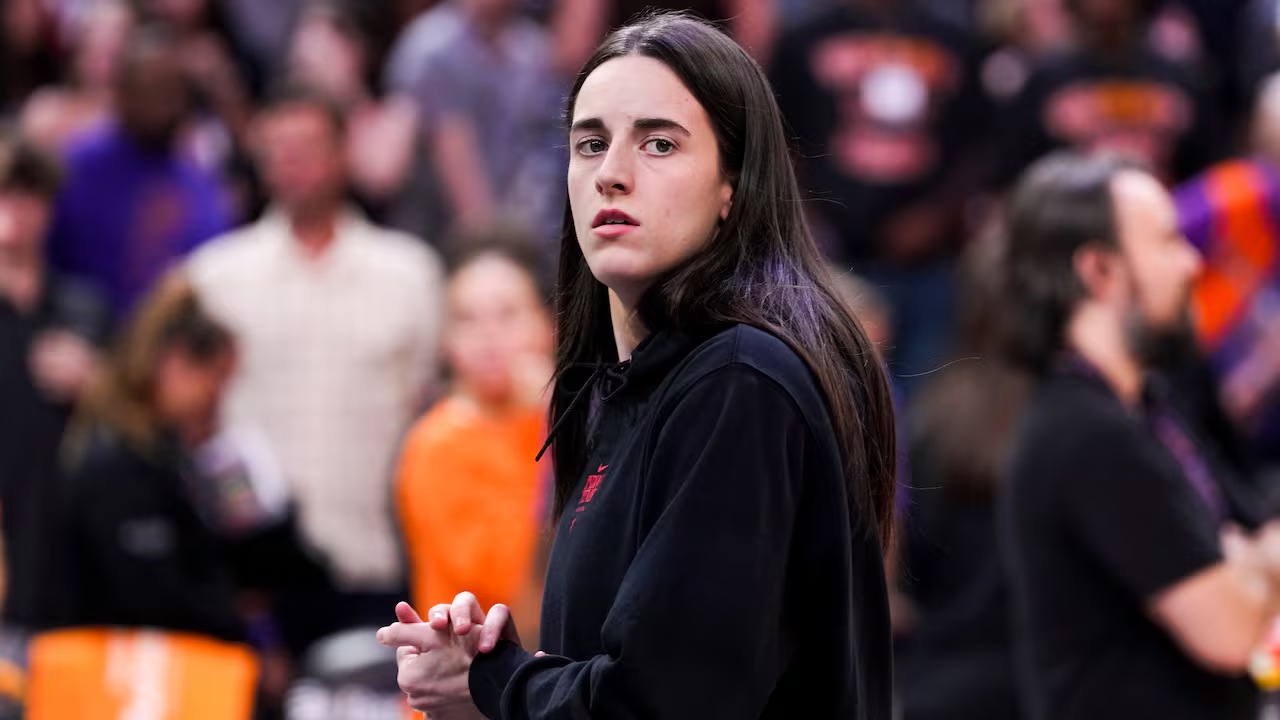
Few athletes in modern basketball have Caitlin Clark Injury created as much excitement as Caitlin Clark. From her historic college career to her transition into professional basketball, Clark quickly became one of the most talked-about names in sports. That is why any conversation surrounding a Caitlin Clark injury instantly captures national attention. Fans, Caitlin Clark Injury analysts, and even casual sports viewers want to know what happened, how serious it is, and what it could mean for the future.
Injuries are an unavoidable part of sports, especially in a physically demanding league like the WNBA. Players compete at an elite level nearly every night, and the pressure placed on star athletes can be intense. When someone as influential as Clark experiences any kind of injury concern, it becomes more than just a medical update. It turns into a discussion Caitlin Clark Injury about player workload, league expectations, team performance, and the future of women’s basketball.
The attention around Clark is unlike anything the WNBA has seen in years. Television ratings have climbed, ticket sales have surged, and arenas are selling out when she plays. That level of fame also means every injury scare becomes a headline. Whether it is a minor strain, a hard fall during a game, or a more serious issue requiring recovery time, the basketball world immediately reacts.
This article takes a deep look at the Caitlin Clark injury discussion, including how injuries affect elite athletes, why Clark’s health matters so much to the league, how professional players recover physically and mentally, and what her future could look like moving forward.
Why Caitlin Clark’s Health Matters So Much
The rise of Caitlin Clark has been one of the biggest stories in basketball over the last few years. Her ability to score from long range, create plays under Caitlin Clark Injury pressure, and deliver highlight-reel moments made her a household name even before entering the WNBA. By the time she turned professional, expectations were already incredibly high.
Because of that popularity, any injury involving Clark feels Caitlin Clark Injury larger than normal sports news. She is not just another rookie or emerging player. She has become one of the faces of modern women’s basketball. Television networks promote her games heavily, fans travel long distances to watch her play, and younger athletes see her as an inspiration.
When a superstar athlete gets hurt, there are Caitlin Clark Injury usually multiple layers of concern. The first concern is obviously the player’s health. Fans want to know whether the injury is serious and how long recovery might take. The second concern involves team success. A franchise built around a star player can struggle significantly when that player is unavailable.
The third layer is the broader impact on the sport itself. Caitlin Clark Injury Clark has brought unprecedented visibility to the WNBA. Many new fans began watching games specifically because of her exciting style of play. That means any extended absence affects league momentum, ticket demand, television ratings, and overall fan engagement.
This type of attention is not unique to Clark alone. Caitlin Clark Injury Basketball history is filled with moments where injuries to major stars changed entire seasons. From Michael Jordan to Kobe Bryant and Stephen Curry, superstar injuries always become defining sports stories. Clark is now operating within that same level of visibility.
The Physical Demands of Professional Basketball
Many casual fans underestimate how physically Caitlin Clark Injury demanding basketball truly is. At the professional level, players sprint, jump, pivot, absorb contact, and change direction constantly. Even a short stretch of games can place enormous stress on the body.
For guards like Caitlin Clark, the physical demands are especially intense. Ball handlers are pressured aggressively by defenders, forced to move quickly in tight spaces, and often targeted physically throughout games. Because Clark is such a dangerous offensive player, opposing defenses naturally focus heavily on her.
That kind of attention increases injury risk. Defenders Caitlin Clark Injury attempt to disrupt rhythm, apply pressure, and force mistakes. Over time, constant physical contact can lead to fatigue, soreness, and injuries ranging from minor strains to more significant issues.
Basketball injuries often develop in two ways. Some happen suddenly during a specific play, such as landing awkwardly after a jump or colliding with Caitlin Clark Injury another player. Others develop gradually through overuse. Repetitive movement, heavy travel schedules, and limited recovery time can slowly wear down muscles and joints.
The transition from college basketball to the WNBA can also be challenging physically. The professional game is faster, stronger, and more demanding. Rookies must adapt to experienced players who are bigger, more athletic, and extremely skilled. Even elite college athletes sometimes need time to adjust to that level of intensity.
Clark entered the league carrying enormous expectations while also facing one of the toughest learning curves in sports. That combination alone can increase physical stress on the body.
Common Basketball Injuries That Affect Guards
When people search for information about a Caitlin Clark injury, they are often trying to understand how serious basketball injuries can become. Guards typically deal with several recurring types of injuries due to the nature of their position.
Ankle sprains are among the most Caitlin Clark Injury common. Quick cuts, rapid direction changes, and landing on another player’s foot can easily cause ankle problems. Even mild sprains may affect shooting balance and movement for weeks.
Knee injuries are another major concern. Basketball places enormous pressure on the knees because of jumping and sudden acceleration. Some injuries involve temporary inflammation or soreness, while others can become long-term problems if not managed carefully.
Hamstring strains frequently impact players who Caitlin Clark Injury rely heavily on speed and explosive movement. Guards often push themselves during fast breaks and defensive transitions, increasing the risk of muscle-related injuries.
Shoulder and wrist injuries also occur regularly Caitlin Clark Injury because players absorb contact while driving to the basket or diving for loose balls. Falls can create lingering discomfort that affects shooting mechanics and ball control.
Fatigue-related injuries are particularly important in professional sports today. Sports scientists increasingly recognize that exhaustion and overuse can make athletes more vulnerable to injury. When players carry huge offensive responsibilities, their bodies experience even greater stress over time.
Clark’s style of play involves constant movement, deep shooting range, aggressive passing, and heavy ball handling responsibilities. That exciting style makes her entertaining to watch, but it also requires tremendous physical energy every game.
The Mental Side of Recovering From Injury
Physical recovery is only one part of the process for elite athletes. Mental recovery can be just as difficult, especially for highly competitive players.
Athletes build their identities around performance. They train constantly, compete intensely, and develop routines that revolve around basketball. When injuries interrupt that routine, frustration often follows.
For someone like Caitlin Clark, the pressure Caitlin Clark Injury may be even greater because of the public spotlight. Every performance is analyzed closely, and every absence generates headlines. Social media discussions can intensify stress, especially when fans speculate about recovery timelines or future performance.
Injured athletes often describe feelings of isolation Caitlin Clark Injury during recovery. While teammates continue competing, injured players spend hours in treatment sessions, physical therapy, and rehabilitation exercises. The daily grind of recovery can become mentally exhausting.
Confidence is another major factor. Returning from injury sometimes requires athletes to trust their bodies again. A player recovering from an ankle or knee issue may initially hesitate during movements that once felt natural. Regaining complete confidence can take time even after medical clearance.
Professional teams now invest heavily in mental Caitlin Clark Injury performance coaching because psychological recovery is considered essential. Sports psychologists help athletes manage anxiety, maintain focus, and rebuild confidence throughout rehabilitation.
Clark has consistently shown mental toughness Caitlin Clark Injury throughout her career. During college, she handled massive expectations, hostile road environments, and nonstop media attention. That mental resilience could become extremely valuable if she faces significant injury setbacks during her professional career.
How the WNBA Handles Player Recovery
The WNBA has continued improving player health Caitlin Clark Injury management in recent years. Teams now use advanced training methods, recovery technologies, and sports science strategies designed to protect athletes and reduce injury risk.
Modern recovery programs involve much more than simple rest. Players work with trainers, physicians, nutritionists, physical therapists, and strength coaches. Recovery plans are often customized specifically for each athlete.
Load management has become an increasingly important topic in professional basketball. Teams monitor practice intensity, minutes played, travel fatigue, and physical workload to reduce stress on players’ bodies.
Nutrition also plays a major role in recovery. Caitlin Clark Injury Professional athletes follow carefully structured diets designed to reduce inflammation, support muscle repair, and maintain energy levels throughout long seasons.
Sleep monitoring has become another Caitlin Clark Injury major focus. Research consistently shows that sleep quality affects recovery speed, Caitlin Clark Injury reaction time, and injury prevention. Teams now prioritize recovery schedules more carefully than ever before.
Technology has transformed rehabilitation as well. Cryotherapy, underwater treadmills, motion tracking systems, and advanced imaging techniques allow medical staffs to evaluate injuries more accurately and track progress in real time.
For a star like Clark, teams are especially Caitlin Clark Injury cautious about recovery decisions. Returning too quickly from an injury can create long-term risks, which is why organizations often prioritize full recovery over short-term urgency.
Media Attention and Public Pressure
One reason the Caitlin Clark injury conversation becomes so intense is the level of media attention surrounding her career. Few WNBA players have entered the league with such enormous visibility.
Sports networks cover her games extensively, and social media reacts instantly to every update. Even minor injuries can become trending topics online within minutes. That level of attention creates additional pressure for athletes trying to recover.
Fans often want immediate answers regarding injury timelines, but recovery rarely follows a perfect schedule. Two athletes with similar injuries may recover at completely different speeds depending on their bodies, conditioning, and medical circumstances.
Media coverage can sometimes create Caitlin Clark Injury unrealistic expectations. Headlines may speculate about return dates before full evaluations are complete. Analysts may debate how injuries affect performance long before recovery finishes.
For young athletes especially, balancing public expectations with personal health decisions can become difficult. Competitive players naturally want to return quickly, but medical staffs usually focus on long-term health rather than short-term excitement.
Clark’s popularity means every update receives national discussion. While that attention reflects her importance to the sport, it also creates enormous pressure that most rookies never experience.
The Impact on Team Performance
Whenever a superstar player gets injured, the entire team dynamic changes. In basketball, one elite guard can influence scoring, spacing, playmaking, leadership, and overall confidence.
Caitlin Clark’s ability to create offense Caitlin Clark Injury affects every teammate around her. Her shooting range forces defenses to stretch farther from the basket, opening opportunities for others. Her passing vision creates scoring chances that many players simply cannot generate consistently.
When a player like Clark misses time, teammates often need to adjust roles quickly. Some players must handle more ball movement, others take larger scoring responsibilities, and coaches may alter offensive systems entirely.
Chemistry can also be affected. Basketball relies Caitlin Clark Injury heavily on timing and rhythm, especially for teams still developing cohesion. Injuries interrupt continuity and force constant adjustments.
At the same time, injuries sometimes create Caitlin Clark Injury opportunities for teammates to grow. Younger players may gain valuable experience handling bigger roles during a star player’s absence. Teams often discover new strategies and lineup combinations during difficult stretches.
Still, replacing a generational talent is never easy. Clark’s influence extends beyond statistics alone. Her confidence, energy, and ability to control game tempo make her uniquely valuable.
Why Fans Feel Emotionally Connected
Sports fans develop emotional connections with Caitlin Clark Injury athletes, especially those who bring excitement and authenticity to the game. Caitlin Clark’s popularity is partly driven by her competitive spirit and visible passion for basketball.
Fans enjoy watching athletes who play with emotion. Clark celebrates big shots, reacts intensely during games, and competes fearlessly. That style creates a stronger emotional connection between athlete and audience.
When fans hear about injuries, they often react emotionally because they feel invested in the player’s journey. They worry not only about games and statistics but also about the athlete’s overall well-being.
Younger fans may feel particularly connected because Clark represents a new generation of women’s basketball. Many young players now model their games after her deep shooting range and aggressive confidence.
The growth of social media has intensified these connections. Fans receive constant updates, interviews, highlights, and behind-the-scenes content that make athletes feel more accessible than ever before.
Because of that visibility, injury news spreads quickly and creates widespread discussion. Fans analyze video clips, debate recovery timelines, and express concern almost immediately after incidents occur.
What This Means for the Future of Women’s Basketball
The conversation surrounding Caitlin Clark Caitlin Clark Injury injuries also highlights how much women’s basketball has grown in popularity. A decade ago, injuries involving WNBA rookies rarely generated nationwide headlines. Today, they dominate sports discussions.
Clark’s rise reflects a broader shift in public interest toward women’s sports. Television audiences have expanded dramatically, sponsorship investments continue increasing, and younger fans are engaging with the WNBA at unprecedented levels.
That growth creates both opportunities and challenges. Increased visibility brings larger audiences and more financial support, but it also increases scrutiny and pressure on players.
League officials understand the importance of protecting star athletes while continuing to grow the sport responsibly. Scheduling, travel demands, recovery time, and player health policies will likely remain major discussions moving forward.
Clark’s influence may ultimately help improve long-term player support systems across women’s basketball. As leagues grow financially, investments in medical resources, training facilities, and recovery programs typically improve as well.
In many ways, the intense focus on her health demonstrates just how important women’s basketball has become within the larger sports landscape.
Caitlin Clark’s Competitive Mindset
One reason fans remain optimistic whenever Caitlin Clark Injury injury concerns arise is Clark’s competitive mentality. Throughout her career, she has consistently demonstrated resilience under pressure.
Elite athletes often separate themselves mentally as much as physically. Talent matters enormously, but determination, discipline, and adaptability are equally important. Clark’s willingness to embrace difficult moments has become one of her defining traits.
During high-pressure college games, she frequently delivered standout performances despite defensive pressure and intense expectations. That ability to stay composed under stress suggests she can handle adversity effectively.
Professional athletes regularly discuss the importance of routine during recovery periods. Competitive personalities usually attack rehabilitation with the same focus they bring to training and games.
Clark’s work ethic has been praised repeatedly by coaches, teammates, and analysts. That reputation matters because successful recovery often requires patience, consistency, and discipline over long periods.
Fans naturally hope to see her continue developing into one of basketball’s biggest stars. Her combination of shooting ability, passing creativity, and confidence gives her the potential to influence the sport for many years.
Lessons Athletes and Fans Can Learn From Injuries
The Caitlin Clark injury conversation also offers broader lessons about sports culture and athlete health. Fans sometimes forget that even elite players are human beings dealing with physical and emotional challenges.
Modern sports place incredible demands on athletes from a young age. Many elite players compete year-round for years before reaching professional leagues. Managing workload and recovery has become increasingly important across all sports.
Young athletes can learn valuable lessons from watching professional recovery processes. Proper conditioning, rest, hydration, nutrition, and injury prevention strategies all matter tremendously.
Parents and coaches may also recognize the importance of avoiding overtraining. Pushing athletes too aggressively without adequate recovery can increase injury risk significantly.
Fans can help create healthier sports environments by respecting recovery timelines rather than demanding immediate returns. Long-term health should always matter more than short-term entertainment.
Professional sports will always involve injuries because competition at the highest level is physically intense. The key is managing those challenges intelligently and supporting athletes throughout the process.
Conclusion:
The attention surrounding any Caitlin Clark injury reflects her enormous impact on basketball. She is more than just a talented rookie or rising player. She represents a transformative moment for women’s sports, the WNBA, and modern basketball culture.
Injuries are an unfortunate reality in professional athletics, but they also reveal how much fans care about athletes and the games they love. Clark’s popularity has elevated interest in women’s basketball to new heights, and that visibility naturally increases attention around every aspect of her career.
What matters most moving forward is long-term health, proper recovery, and sustainable success. Basketball history shows that elite athletes often face adversity along the way. Many legends dealt with injuries at various stages of their careers and still achieved remarkable greatness.
Clark’s talent, competitiveness, and mental toughness suggest she has the tools needed to handle difficult moments successfully. Fans, teammates, and the broader basketball community will continue supporting her journey as she develops into one of the defining athletes of her generation.